Application to purchase fields
Aluminum honeycomb core manufacturers requirements by end use
Use cases do not prove that a mill can run your sandwich stack. This page turns architecture, marine, transportation and tooling context into purchase fields for aluminum honeycomb core manufacturers: alloy, cell size, density, packaging, destination and documents. Suitability, fire performance and structural allowables stay with the buyer’s qualified reviewers.
- 01 Intended process: sandwich bonding, infusion, CNC slicing, or distribution restock
- 02 Geometry window: cell size, foil thickness, slice thickness, density, sheet size
- 03 Contact media, temperature and facing adhesive only when the buyer names them
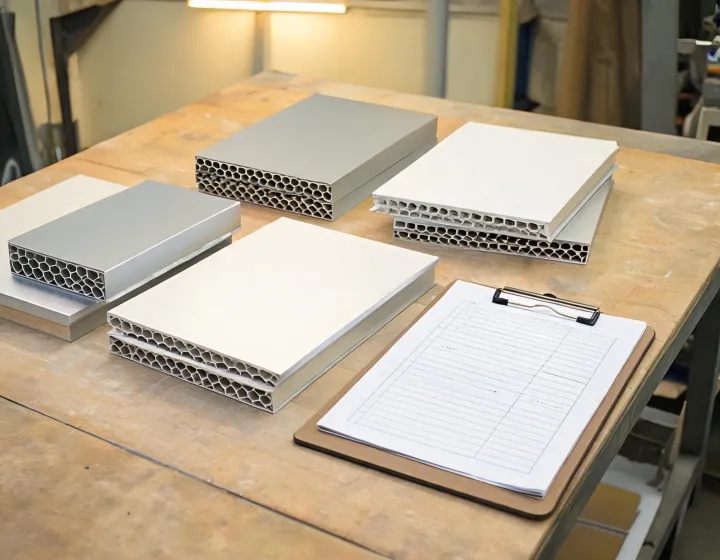
Application matrix for aluminum honeycomb core manufacturers RFQs
Each row lists extra fields that usually travel with that use. They are questions, not performance claims. Substitute alloys, polymer cores or larger cells stay on a separate quotation line. Public product-family pages can frame questions; they are not evidence for the quoted lot.
| Use context | Specification questions | Packaging and documents |
|---|---|---|
| Architectural panels | Alloy, cell size, slice thickness, density, facing compatibility, color only if a visible core edge is specified | Crate and edge protection; SDS; CoA density and foil thickness; sample coupon from the same expansion lot if required |
| Marine interiors | Alloy, corrosion treatment, moisture, density, flash point if solvents are present in the facing system | Sealed wrap; TDS as mill statements, not process recipes from this desk; transport class if assigned |
| Transportation interiors | Cell size, foil thickness, density, molecular weight of any polymer film if named, particle size if powdered adhesive is quoted with the core | Gaylord or crate; TSCA status for US supply; fire-document questions the buyer lists as mill files |
| Tooling and fixtures | Grade, purity of foil if the buyer names an assay, density, slice thickness, pH or viscosity only when a companion resin is in the same RFQ | ISO 9001 evidence only as a mill file to review; this site holds none |
| Distribution restock | Commercial grade, form, cell size, density window copied from the downstream customer brief | Repeating crate size; CoA layout; REACH statement where the buyer asked for it |
A recurring dispute is whether cell size or density should lead the RFQ. Smaller cells can raise adhesive consumption and panel weight while larger cells can change local buckling questions; neither outcome is a performance claim from this desk. Record both values, the measurement method, and whether the mill may substitute. Another dispute is mill-typical data versus lot CoA: typical compressive figures cannot close an open assay, moisture or foil-thickness cell.
Documents that change with destination, not with marketing copy
US inland delivery, a bonded warehouse, or export from a third country can change labeling and carrier acceptance even when the alloy and cell size are unchanged. Ask aluminum honeycomb core manufacturers to state UN number if assigned, DOT or IMDG class, and SDS revision for the packed article. Active content, solids content, trace metals and moisture apply only when the buyer’s method names them. Laboratory, EHS and formulation decisions remain with qualified parties. This page does not instruct cutting, expanding, bonding or hazardous use. After the matrix is complete, send quantity and timing through the requirement form or review inquiry options.
Translate the application into a factory quotation request
Record sandwich bonding, infusion, CNC slicing or restock intent, then cell size, density, crate and US inland or port delivery. We request factory wholesale quotations without treating aluminum honeycomb core manufacturers as interchangeable.